Repayment Ratio
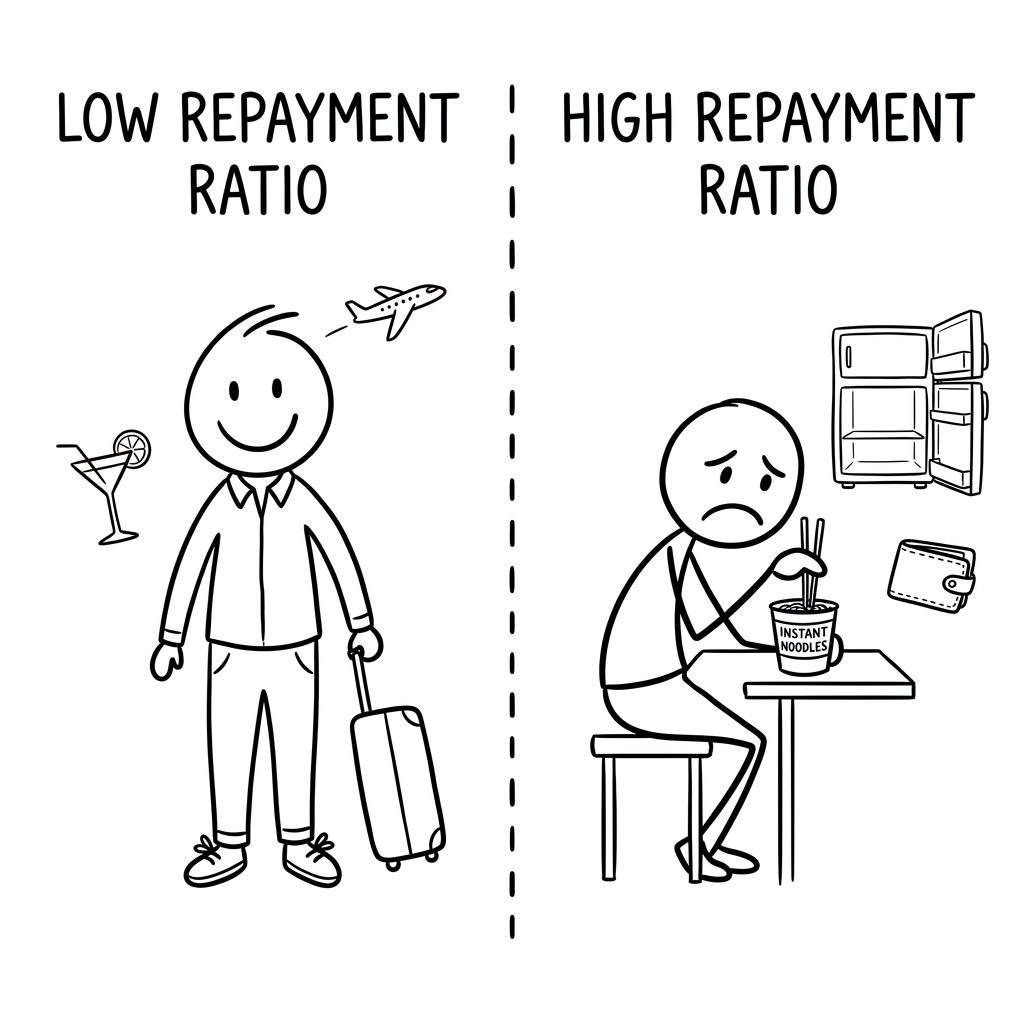
The repayment ratio measures what proportion of your gross income is consumed by your mortgage repayments each month. It is one of the most direct ways to gauge whether a mortgage is genuinely manageable relative to your earnings. A low ratio means repayments are a comfortable slice of your income, leaving plenty for living costs, savings, and unexpected expenses. A high ratio means repayments are taking up a large share, leaving less margin for everything else.
Financial planners and lenders commonly use rough thresholds as a starting guide. Repayments that represent a modest portion of gross income are generally considered sustainable, while repayments that rise above a certain share are viewed with increasing caution. The specific thresholds vary between lenders and change over time, but the principle is consistent: the higher the ratio, the less buffer you have.
It is worth noting that the repayment ratio is just one measure. A lender will also consider your actual after-tax income, your living expenses, any existing debts, and the stress-tested repayment figure. Two borrowers with the same repayment ratio can have very different risk profiles depending on their other financial commitments.
Your repayment ratio is a direct product of three things: your loan size, your interest rate, and your income. The most effective ways to improve it are to increase your deposit (reducing the loan), accept a lower purchase price, or grow your income. Even a modest rate difference can shift the ratio noticeably, which is why the choice of fixed term and the timing of mortgage decisions matter.
Related Terms
See how this affects your numbers
Run the mortgage calculator to see how repayment ratio plays out in your specific situation.