Official Cash Rate (OCR)
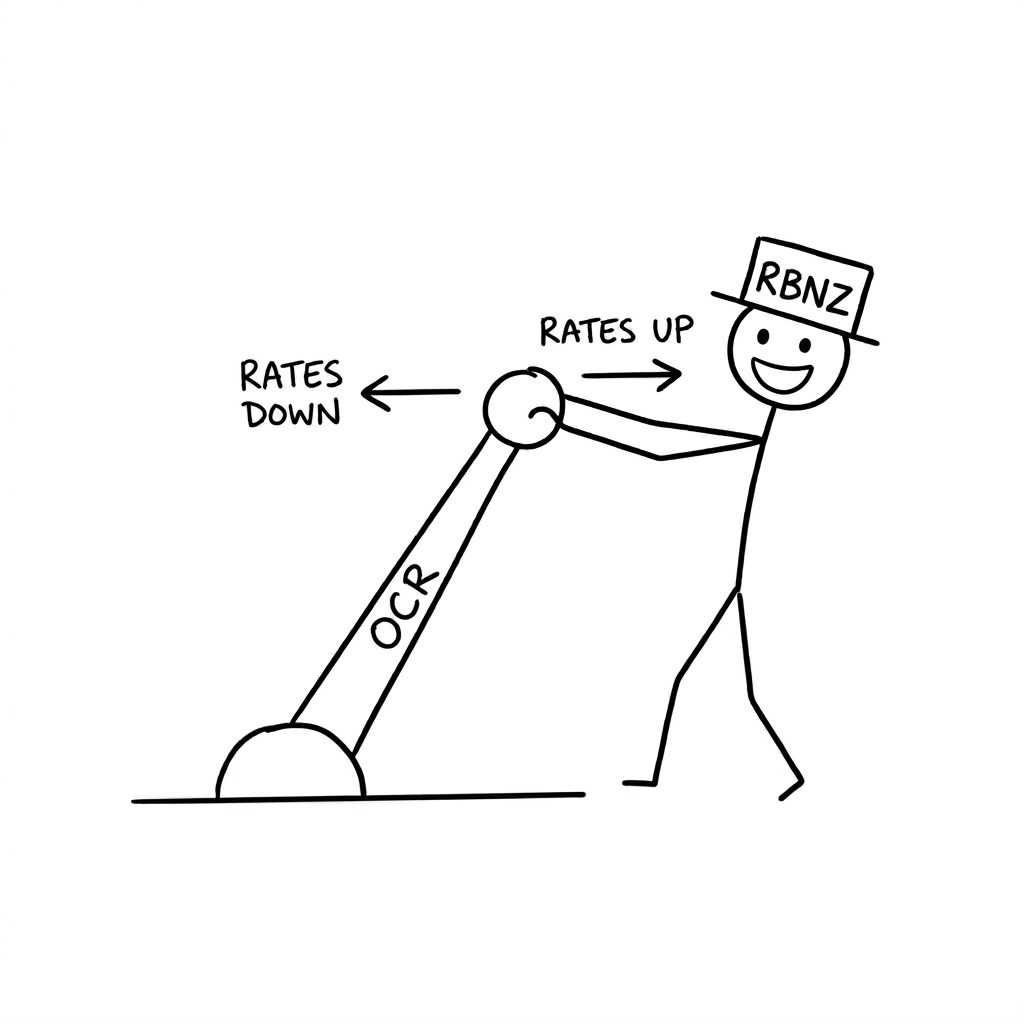
The OCR is the interest rate the Reserve Bank of New Zealand sets for overnight lending between banks. Banks use that money to fund loans, including your mortgage. When the RBNZ raises the OCR, their borrowing costs go up and they tend to pass that on through higher mortgage rates, often within days or weeks.
Think of the OCR as a dial that controls the temperature of the whole economy. When inflation runs too hot, the RBNZ turns it up. Borrowing becomes more expensive, people spend less, demand falls, and prices stabilise. When the economy slows too much, they turn it down to encourage spending and investment. The RBNZ targets keeping inflation within a set band, check the RBNZ website for the current target.
NZ has seen significant OCR swings in recent years, with rate rises flowing directly through to higher mortgage costs for homeowners when their fixed terms ended. That experience is exactly why banks apply a stress test: they want to know you can still afford repayments if the OCR moves sharply after you borrow.
When the OCR rises, your mortgage repayments are likely to follow, particularly when your fixed term ends and you re-fix at current rates. When the OCR is falling, shorter fixed terms let you benefit from lower rates sooner. When it is rising, a longer fixed term can offer protection, though it also means you might miss out if rates fall before your term ends. A mortgage adviser can help you think through the trade-offs at any given time.
See how this affects your numbers
Run the mortgage calculator to see how official cash rate (ocr) plays out in your specific situation.